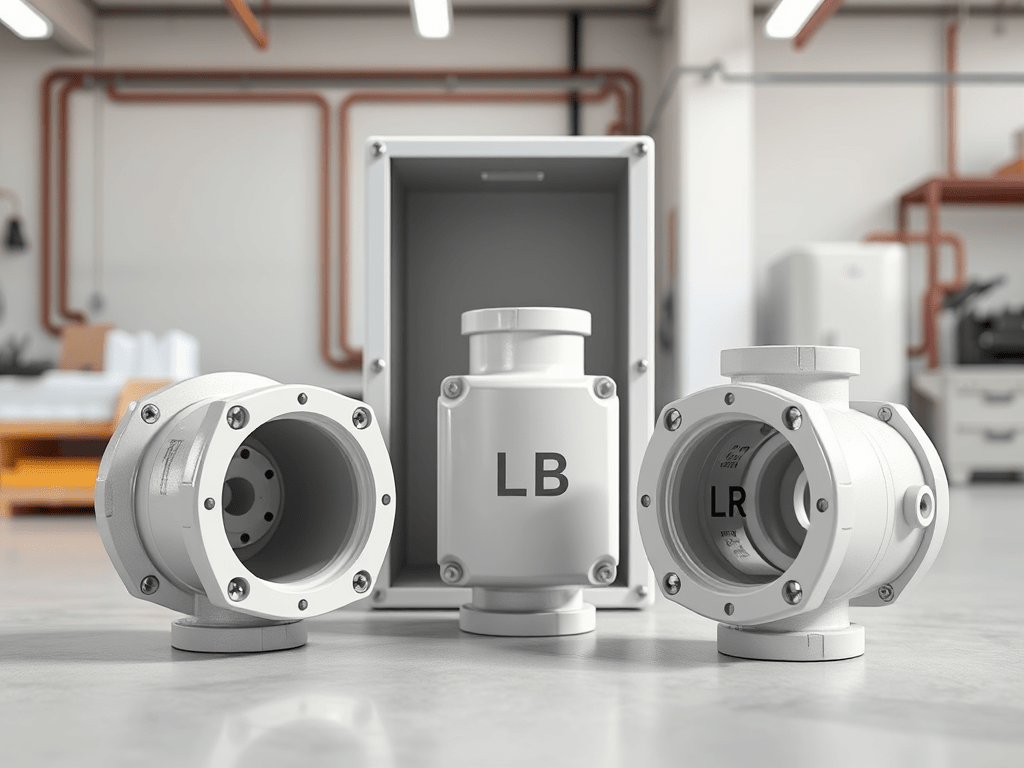
How to Choose the Right Conduit Adapter: LB, LL, LR Explained
Picking the correct conduit body saves time on pulls, keeps your bends clean, and helps you stay code-compliant. In this quick guide, we break down the differences between LB, LL, and LR so you can choose the right fitting the first time.
Quick definition: These are all 90° conduit bodies. The second letter tells you where the hub points when you’re facing the cover: LB = back hub, LL = left hub, LR = right hub.
What Is a Conduit Body (Adapter)?
A conduit body (often called an adapter) is a fitting that lets you change direction, provide access for wire pulls and maintenance, and, when rated, help maintain a weather-resistant seal. They’re common in outdoor runs, service entrances, and tight interior spaces where a standard box would be bulky.
LB vs LL vs LR: Orientation & Best Use
| Type | Hub Orientation (facing the cover) | Typical Use | Installer Tips |
|---|---|---|---|
| LB | Back hub | Through-wall turns into meter bases, panels, or boxes; exterior to interior transitions | Great for clean penetrations through walls; common residential go-to |
| LL | Left hub | Turns up/left along a wall or rack when space is tight | Use when the sweep needs to exit left; can reduce pull tension on tight corners |
| LR | Right hub | Turns down/right along a wall, machine, or enclosure | Mirror of LL; plan for enclosure clearances and cover access |
How to Choose the Right Adapter
- Trace the run: Stand where the cover will face and note which direction the conduit must exit—back, left, or right.
- Confirm environment: Outdoor / wet locations need weather-resistant, gasketed covers and compatible hubs.
- Check listing: Only use for splicing if the body is specifically marked/listed for splices.
- Size correctly: Match the trade size (e.g., 1/2″–2″) to the conduit and conductor fill requirements.
- Plan serviceability: Ensure the cover remains accessible for pulls and inspections after installation.
Shop quality conduit bodies: Browse LB, LL & LR
Specs That Matter
- Material & finish: Die-cast aluminum for strength and corrosion resistance; look for powder-coat or anodized finishes in harsh environments.
- Gasketed covers: Needed for outdoor/wet locations; verify NEMA/UL ratings on the product page.
- Thread quality: Precision-cut threads make for faster, leak-resistant installs.
- Cubic inch capacity: If listed for splicing, confirm volume and conductor limits.
Common Use Cases
- Service entrance: LB through exterior wall into meter or main panel.
- Equipment drops: LL/LR to route around obstacles on mechanical skids or racks.
- Outdoor circuits: Pair weather-rated bodies with weatherproof outlet boxes and covers for durable installations.
Pro Install Tips
- Dry-fit first to confirm clearances and cover accessibility.
- Use appropriate thread sealant for wet locations (compatible with the materials in use).
- Support the conduit within the code-required distances of the fitting to reduce strain on threads.
- Torque cover screws evenly to avoid deforming the gasket.
FAQ
Can I make splices inside an LB, LL, or LR?
Only if the conduit body is specifically marked/listed for splicing and the conductor fill and volume limits are met. Many bodies are pull points only. Are LB, LL, and LR conduit bodies weatherproof?
Models with gasketed covers and appropriate ratings are suitable for wet locations. Check product specs and ratings, and use compatible sealing methods at the hubs. What sizes do these conduit bodies come in?
Common trade sizes range from 1/2″ to 2″. Match the size to your conduit and verify conductor requirements for pulls or splices. Which one should I use for a through-wall turn into a panel?
An LB is typically used for through-wall penetrations into panels, meter sockets, or junction boxes thanks to its back hub orientation.
Ready to build it right? Shop Conduit Bodies
Explore more: Conduit Bodies · Weatherproof Boxes
 Conversions Tech